


A Conversation with Kevin Mullins

Aggiornamento: 10 giu
Kevin Mullins is a British photographer known for his documentary approach to weddings and family life. A former IT professional, he left the corporate world to pursue photography full-time and became one of the leading voices in documentary wedding photography. He was also the first Fujifilm Ambassador for Wedding Photography, helping to establish mirrorless cameras as a serious tool for professional wedding photographers. In this interview, he talks about photography, storytelling, memory, authenticity, and the future of the medium in the age of AI.
When you photograph a ceremony, what do you feel is truly important to document?
The honest answer is all of it, but not all of it carries the same weight.
The official moments matter. The vows, the rings, the kiss, all of those things are important. You would be a fool to miss them. They are the framework of the ceremony. But they are not the whole story.
What I am really watching for is everything happening around those moments. A ceremony is one of the few parts of a wedding day where almost everyone in the room is feeling something at the same time, and most of them have forgotten the camera is there. That is where the good stuff is.
The couple are obviously at the centre of it, but the story is everywhere. I have always felt it is often on the periphery, not in the middle of the room. The official moments tell you what happened. The unnoticed ones tell you what it felt like.
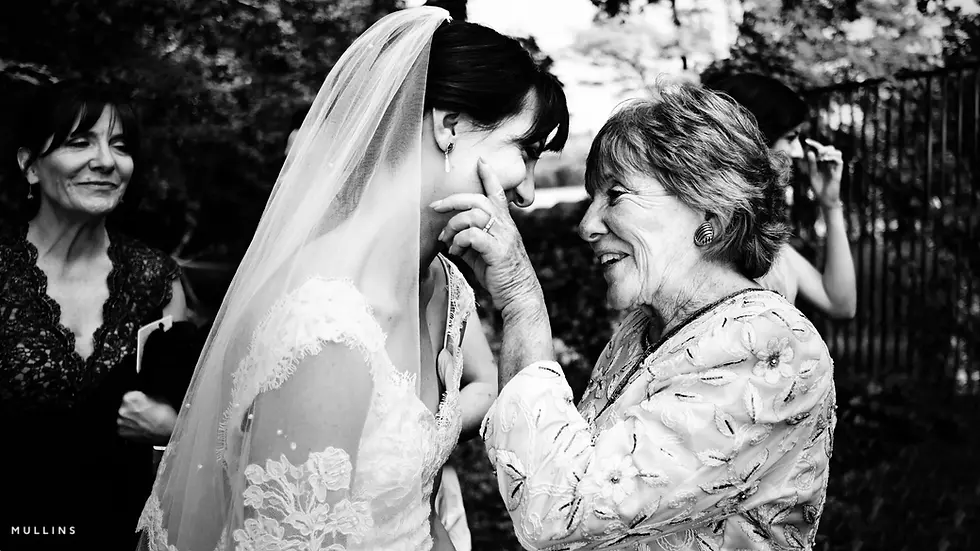
Your approach is often described as discreet and documentary. What do you believe the role of the photographer should be?
I think the role is to be a storyteller, but not in a grand or theatrical sense.
Being an observer is the starting point. You cannot tell a story you have not noticed. Most of my job is watching, anticipating and understanding how people behave with each other. But observation on its own is not enough. A CCTV camera observes. What makes a photographer different is that you choose what matters, when to lift the camera, and when to leave something alone.
Discretion is the method, not the end goal. The quieter I am, the less people perform. The less people perform, the more honest the pictures become. I would never pretend to be invisible, though. The skill is in being present without becoming the main event.
How should a photographer approach the people and environments they are documenting?
With empathy and respect, every time.
I do not think empathy and technical skill are in competition. You have to know your craft. You have to understand light, exposure, composition, timing, and how your camera behaves when the light disappears in a dark church. If you are fumbling with settings, you will miss the moment.
But the technical side is there to serve the observation side. If you walk into a room as though it is a set and everyone in it is there for your benefit, people feel that immediately. They tighten up. They perform. If you walk in with curiosity and respect for what is already happening, people relax and go back to being human.
Respect also means knowing when not to photograph. I have been at weddings where genuinely difficult things have happened: split families, grief, tension, illness, and on one occasion a grandmother passing away in front of me. There are moments where the correct photographic decision is to lower the camera. Just because you can take a picture does not mean you should.
I have said it for years: a photograph does not have to be good, it just has to be important.

How much does equipment influence the photographer’s relationship with people?
I think equipment matters most because of how it changes the photographer.
When I moved my wedding work over to Fujifilm, it was not a marketing decision. The cameras simply suited the way I wanted to work. They were smaller, quieter and less intimidating. They let me stay close to people without making the whole thing feel like a production.
A big DSLR and a fast zoom can be brilliant tools, but for me they created too much of a barrier. A smaller mirrorless camera with a little prime lens does not trigger the same reaction.
That is why becoming Fujifilm’s first wedding ambassador meant so much to me. At the time, the expectation was still that serious wedding photographers used big DSLRs and fast zooms. I was working with small mirrorless cameras and primes, and building a documentary career around that way of seeing. It felt like a validation of the approach as much as the kit.
What does your working setup look like today?
For documentary wedding and family work, I use Fujifilm X Series cameras, mainly the X-T5 and the X100VI. The X-T5 does the heavy lifting with my prime lenses, and the X100VI is probably the camera I love most. It is tiny, almost silent, and that fixed 35mm-equivalent lens forces you to move your feet and think.
My dream documentary camera would be an updated X-Pro3. I adored that camera. The rangefinder-style body and the hybrid viewfinder suited me better than almost anything else Fuji has made. If a proper successor ever appears, it would go straight back into my wedding bag.
Outside professional work, the X100VI is the camera I carry most. A lot of my personal work is street photography. I do not feel the need to document everything, though. It is less about always shooting and more about being able to shoot if something genuinely makes me want to lift the camera.
Which photographers have had the strongest influence on you?
It is a real mix, and most of them are not wedding photographers.
Within the wedding world, Mel DiGiacomo was a huge influence. His work showed me that wedding photography could be raw, emotional, funny, messy and genuinely human. It did not have to be polished and posed.
But I have always learned more by looking outside wedding photography. Martin Parr, Daido Moriyama and Jane Bown all influenced me in different ways: Parr for the ordinary and absurd, Moriyama for the energy and rawness, and Bown for her quiet restraint and humanity. If you only look at your own genre, you can end up making a photocopy of a photocopy.
How has photography changed your life?
Almost entirely for the better.
Before photography, I worked in financial IT in the City of London. It was a proper career, with decent money, structure and responsibility, but I was chained to a desk, commuting, and doing the corporate thing. I was burnt out.
Photography gave me a career I genuinely believed in, built on my own terms. It gave me the freedom to shape my work around my family rather than the other way around. When my children were small, I was around during the week. I took every August off, and our family thrived because of it.
It also changed the way I see the world. When you spend your life observing, you do not really switch that off. I notice light. I notice gestures. I notice the small human details that most people walk past. That is a wonderful way to experience the world, but some moments do not need photographing. They need you actually there.
What relationship do you have with time, memory and family photographs?
Time is really the whole point of what I do.
When you start out, you think about time in the obvious way: timing the shot, catching the expression, pressing the shutter at exactly the right fraction of a second. But as I have got older, I have become more interested in the longer relationship between photographs and time. A photograph’s real value often reveals itself slowly.
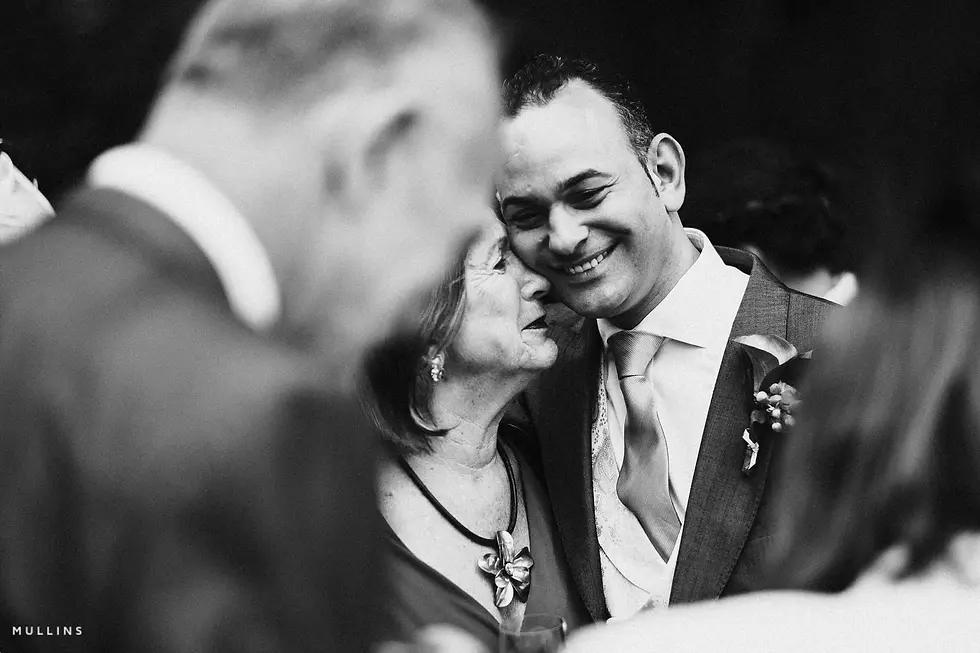
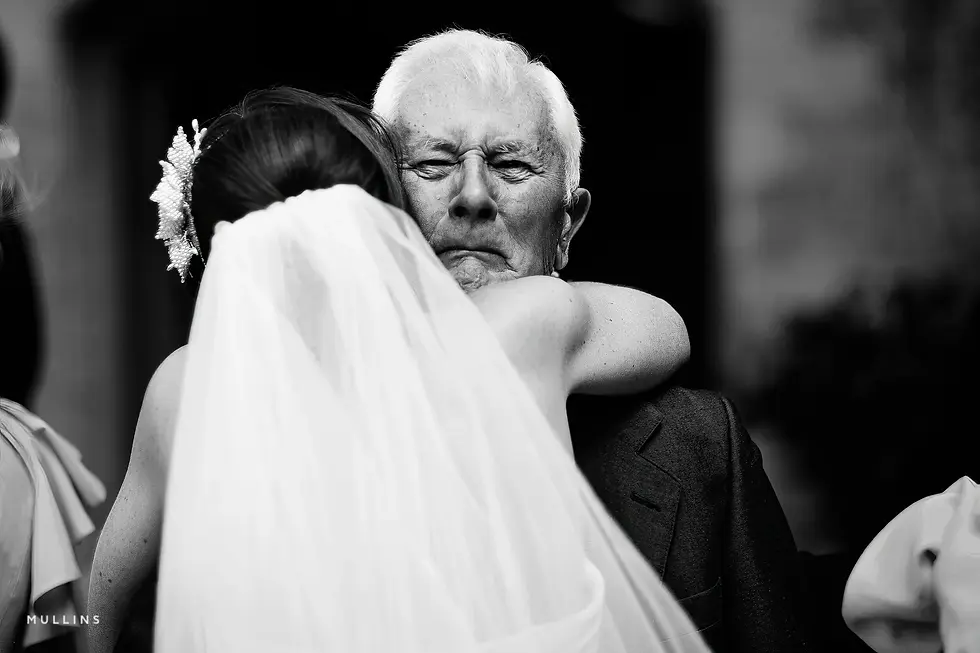
On the wedding day, the obvious picture might be the big emotional moment. But ten or twenty years later, the photograph that makes you smile might be much simpler. A grandparent’s hand on a shoulder. Someone in the background laughing at a private joke. A look between two people that only the family truly understands.
That is why documenting family life matters so much to me. I have photographed my own family since I first picked up a camera. I photograph them in much the same way I photograph weddings: not lined up against a wall and told to smile, but in the mess, the boredom, the in-jokes, the ordinary Tuesday evening nothing-much.
But you cannot let documenting your family become a substitute for being part of your family. Some moments with my children did not need me to photograph them. They needed me to be a dad, not a photographer.
What matters more: light, composition or the moment itself?
The moment. If you forced me to choose, I would take the moment every time.
That does not mean skill is unimportant. Light, composition, timing, editing, all of it matters. If you do not understand those things, you will butcher even the most beautiful moment in front of you. The ideal is always both: a real moment, beautifully seen and beautifully made.
But a technically perfect photograph of nothing in particular is just an empty frame. It might impress other photographers for a few seconds, but then it is gone. A slightly imperfect photograph of something that genuinely mattered will be treasured forever. Nobody who loves the people in a photograph cares that the composition is a bit off.
How do you think social media and the UK wedding market have changed the profession?
Social media has changed everything, and I have mixed feelings about it.
It is a shop window. It helps clients find you. It allows photographers to share work, build an audience and connect with people. I have benefited from that, so I am not going to pretend it has no value.
But I really dislike the ego of likes. When photographers start making work for the algorithm, the work changes. They chase whatever performs, and in doing that they can miss the most important pictures for the most important people, who are their clients. A wedding is not your portfolio shoot. It is not content. It is someone’s real life.
The market itself has changed too. When I started, UK wedding photography was still fairly traditional. Documentary photography existed, but it was something you had to explain. Now, the unposed, honest approach is something many couples actively seek out. But the market is also much more crowded. Competence is not enough. You need a point of view. The clients who value what I do are buying the way I tell their story.
How do you feel about AI-generated imagery and the future of photography?
I am not anti-AI. It is here, it is powerful, and it is not going away. It will do remarkable things, and in some areas it will be useful. It will also disrupt livelihoods, especially in editorial, fashion, commercial and fine art image-making, and I feel real sympathy for photographers in those areas.
But documentary photography is different. Here, I am completely adamant.
Documentary work has to be real. It is a record of something that actually happened. No staging, no recreation, and absolutely no AI-generated “moments”. The entire value of a documentary photograph rests on one promise: this happened. This person was here.
What really frustrates me is seeing wedding photographers use AI-generated “candid” images and pass them off as real moments. To fabricate that and present it as something from a real day is dishonest.
I think the profession is splitting. On one side, there will be constructed, AI-assisted, highly polished image-making. On the other, there will be a growing hunger for work that is genuinely human, honest and real. The more perfect and fabricated imagery becomes, the more people will crave something they can trust.
I know which side I am on. I am in the storytelling business. My value rests on the fact that what I show people actually happened.
Where do you think professional photography is heading over the next decade?
Nobody really knows, but my sense is that the split between image-making and photography will become more obvious. AI-assisted imagery will become normal in many commercial spaces. The ability to make a polished image will become less impressive because polished images will be everywhere.
That means the value changes, not towards technical perfection, but towards truth, point of view and authorship.
Commercially, I think the middle will get squeezed. The competent but generic photographer is in trouble, because competent and generic is becoming easier, cheaper and more available. The photographers who thrive will be the ones with a strong personal voice, or a clear reason people seek them out specifically.
For documentary wedding and family photography, I am quietly optimistic. People will still get married. Families will still grow, change, age and lose people. The desire to have those things honestly photographed by a real human being who was actually there is not going away.
But the bar will rise. You will not be able to coast on competence. You will need to stand for something and be different. The technology will keep changing, and the market will keep shifting. But a real, personal way of seeing has never been more valuable. At its heart, photography is still about paying attention to people and life, and making a picture of something true.
Website: https://www.kevinmullinsphotography.co.uk/ Instagram: @kevinmullinsphotography
YouTube: @documentaryeye


Commenti